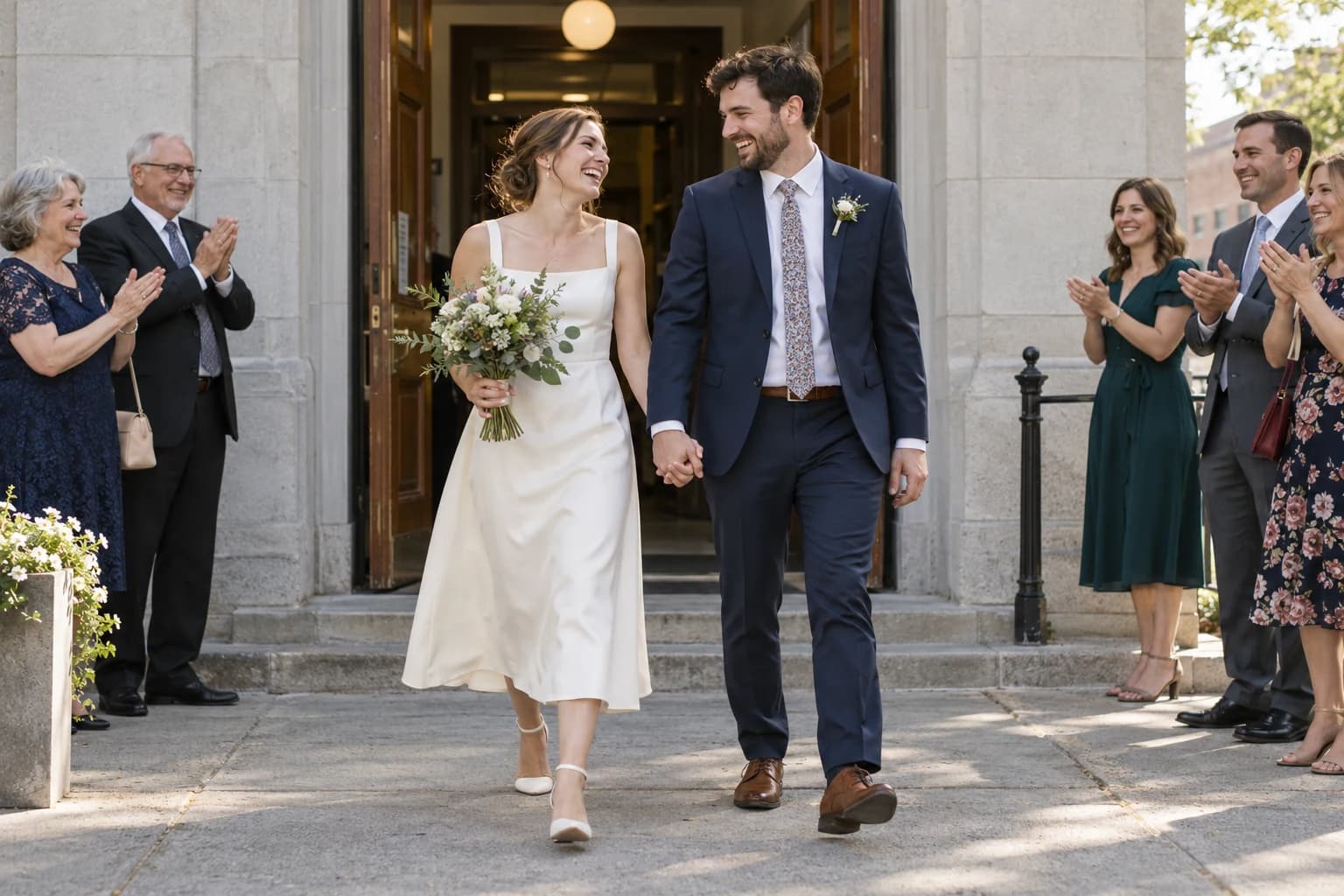
Cover image: AI-generated candid wedding inspiration with fictional people; not a real wedding, archival photograph or photographer's portfolio.
A carefully arranged portrait and a burst of laughter tell different truths about a wedding. One helps us recognize the people who gathered; the other brings back the feeling of being there. The history of American wedding photography is richer when we see these approaches as companions rather than stages in which one completely replaced another.
Surviving photographs are individual records. A famous wedding may have unusually extensive coverage, while an ordinary family's surviving album may contain only a few pictures. Neither should automatically stand for every wedding of its time.
The nineteenth century: a lasting portrait
The Library of Congress wedding collection includes a Mathew Brady Studio portrait of Charles Stratton and Lavinia Warren from 1863 and a wedding picture by W. J. Hazenstab from 1894. These examples show the enduring value of a photograph that identifies the couple and marks the occasion.
Look at pose, clothing and the setting, but do not invent a story from those details alone. A serious expression does not prove an unhappy marriage, and a portrait does not necessarily record what happened during the ceremony. Read the catalog description and any family notes alongside the image.
The early twentieth century: more views of the day
The same collection includes a 1907 stereograph titled Dressing the Bride and a marriage-bureau photograph dated 1915–1920. These different subjects invite us to look beyond the couple's finished portrait to preparation and the places where marriages happened.
Changes in photography mattered, but so did the photographer's interests and the circumstances of the event. The V&A's history-of-photography resources explain how technologies and artistic ideas helped shape different approaches during the early twentieth century. That broader context is useful without assigning one exact starting year to candid wedding photography.
Mid-century: formal groups and informal moments together
Toni Frissell's coverage of the 1953 Bouvier–Kennedy wedding provides a particularly clear comparison. The Library of Congress holds both a family group portrait and a reception photograph of the couple talking. The two pictures perform different jobs within the record of one celebration.
The group photograph preserves relationships and presence; the conversational scene draws attention to interaction. That comparison is an interpretation of the images, not a claim that Frissell invented either approach. For couples today, it is a useful reminder that a small set of planned portraits can sit comfortably beside candid coverage.
From inherited albums to the way we share today
A physical album encourages a particular kind of viewing: turning pages, noticing a sequence and stopping to ask who someone was. A digital gallery makes it easier to share many photographs, but a large collection can still benefit from a considered selection and clear labels.
When looking through family pictures, note names, approximate dates and places while someone can identify them. Keep that information with your copies. If you include old photographs in a wedding display, ask permission and use reproductions so fragile originals do not have to travel.
Choose an approach by looking at complete weddings
For your own photographer, use words such as formal, documentary or editorial as the beginning of a conversation. Ask to see complete galleries and explain what you like in specific images. A quiet ceremony, a fast-moving dance floor and a dark reception room all place different demands on the coverage.
- Choose a manageable list of essential family groups and name someone who can help gather them.
- Tell the photographer about meaningful objects or ceremony moments beforehand.
- Discuss how much direction you want during couple portraits.
- Ask about delivery, album options, image use and how you should retain your copies.
- Share any privacy preferences for guests or children before the day.
For winter 2026–27 and spring 2027
In winter, ask to see work in lighting similar to your venue's evening conditions and reserve an indoor portrait location. For spring, discuss a sheltered alternative to garden photographs and the time needed to move between spaces. Base the plan on your location and schedule rather than a seasonal promise of perfect light.
A historic reference can help communicate a mood: perhaps one composed family portrait like an album picture, followed by relaxed photographs of conversation. Give your photographer room to interpret the idea rather than asking for a replica of someone else's day.
Wedding photography history FAQs
Did candid photography replace formal wedding portraits?
The historical examples here show both approaches existing together. You can include both in a modern wedding gallery.
Can we ask for a vintage photographic look?
Yes. Show specific references and discuss color, contrast and grain, then review complete galleries to understand the photographer's usual finish.
What should we preserve besides the image files?
Keep names, dates, locations and any important context with your selected photographs. Ask your photographer about the delivered files and practical options for prints and albums.
Browse wedding photographers and bring your questions to a meeting. Our winter wedding guide and timeline builder can help make space for the photographs that matter.