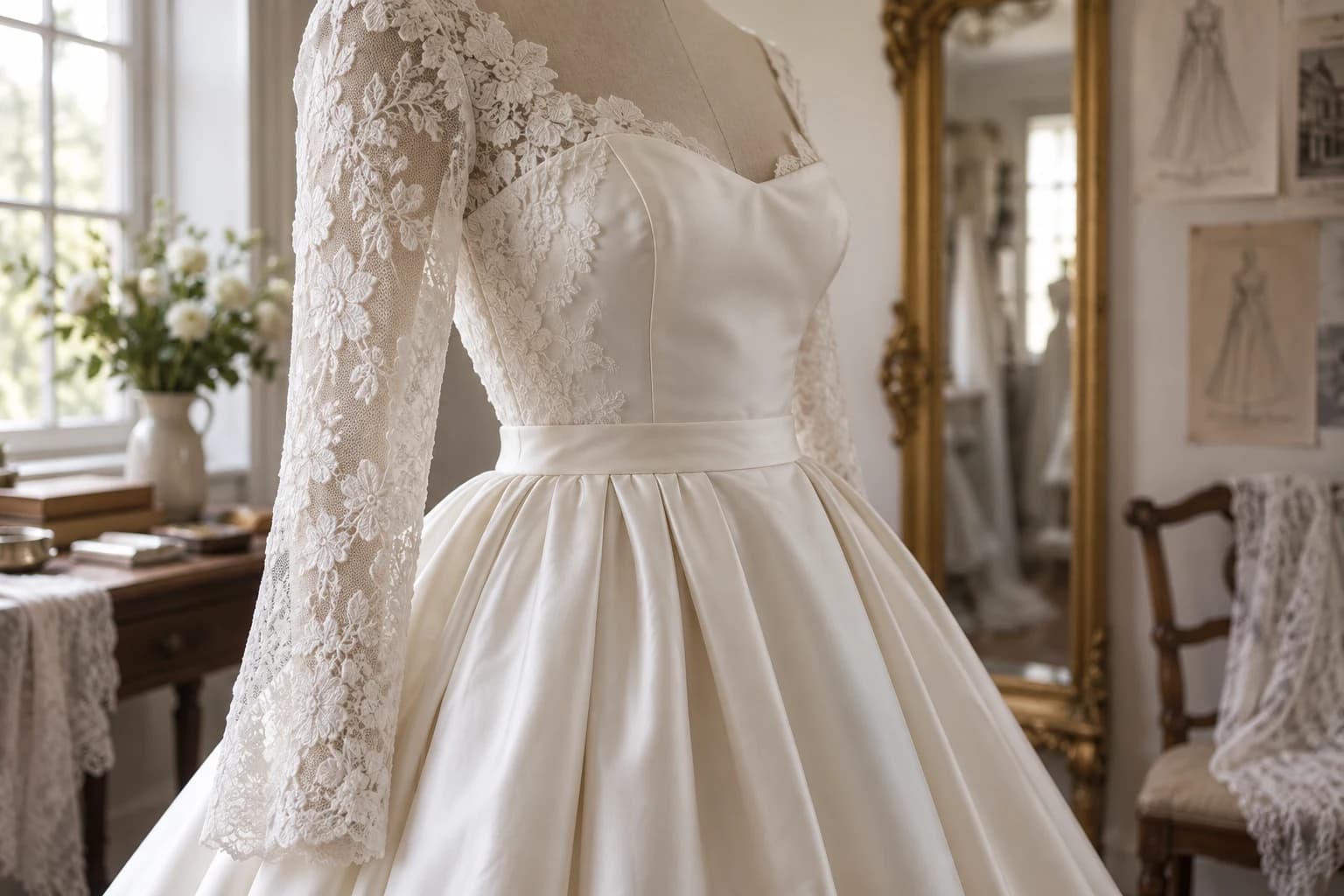
Cover image: AI-generated bridal fashion illustration in a realistic photographic style; not a museum garment or designer portfolio.
A white wedding dress can feel so familiar that it seems timeless. Yet bridal fashion has a history of changing preferences, practical decisions and powerful images. Knowing a little of that story makes choosing your own outfit more interesting—and leaves room for something other than the expected gown.
Queen Victoria popularized the look; she did not invent it
Queen Victoria married Prince Albert in 1840 wearing cream silk satin with Honiton lace. The White House Historical Association's account of her dress explains that the ensemble helped popularize the familiar bridal look, while explicitly rejecting the idea that it was the sole origin of white wedding dresses.
That is the useful distinction: an influential royal example helped shape fashion, but it was not the beginning of every bride's story. Nor does it tell us what any particular American family could afford, preferred or considered appropriate.
American brides had a wider palette
The Smithsonian Institution Archives' discussion of bridal colors describes alternatives to white, including blue, green and black. It also connects the development of a white-wedding ideal with etiquette advice and, later, specialized dress manufacturing and bridal magazines in the 1930s. Familiarity grew through cultural influence and commerce, not through one nationwide decision.
That history is a reason to look carefully at older photographs. A monochrome image cannot reliably identify a fabric's original shade. If you want to understand a relative's gown, search for a written description, a surviving garment or someone who remembers it rather than reading color from a grayscale print.
A dress could have a life beyond the ceremony
In June brides and D-Day, the Smithsonian's National Museum of American History discusses wedding dresses being reused or altered and the later growth of the once-worn bridal ideal. It also describes wartime parachute fabric becoming material for wedding gowns. These examples show how bridal clothing could reflect available resources and personal circumstances as well as fashion.
If you have an inherited garment, begin by asking about its condition before planning alterations. A dress that looks strong on a hanger may have fragile seams or fabric. Discuss it with an experienced alteration specialist or textile conservator, and keep the option of displaying a photograph instead of wearing the original.
White, ivory and cream: make the choice in real light
For a wedding today, the color name on a label is only a starting point. Compare samples beside your face and against the actual lining. A textured lace and a smooth satin can look quite different even when both are described as ivory. Take photographs with permission, but make the final judgment in person where possible.
- Try the outfit in daylight and in lighting similar to your venue's.
- Check how a veil, shirt, jacket or other pale accessory looks beside it.
- Ask which alterations are included and when fittings should happen.
- Sit, walk and lift your arms to see how the outfit behaves.
Choosing a gown for autumn 2026 or spring 2027
For an autumn celebration, think about transitions between a warm indoor room and a cool outdoor portrait session. Try a wrap or jacket with the neckline before buying it. Make sure someone knows where it will be kept and when you may want it.
For spring, consider the route to the ceremony and the place you will stand for photographs. Damp ground and long hems may need a practical plan. Ask about a bustle, an easy way to carry the train and a sheltered portrait alternative. These are questions for your own date and location, rather than assumptions about the weather.
Your outfit can carry your own meaning
Enjoy the tradition if it speaks to you. Choose a color, a suit, separates or a simpler dress if those feel more natural. An heirloom accessory, a meaningful piece of jewelry or a particular fabric may connect you to family history without requiring a reproduction of someone else's outfit.
White wedding dress FAQs
Was Queen Victoria the first bride to wear white?
No. Her 1840 wedding helped popularize the look; it did not create the first white bridal dress.
Does a wedding dress have to be white?
No. Choose clothing that fits your preferences and any ceremony requirements you have agreed with your officiant or community.
Can a modern dress still feel vintage?
Yes. A lace detail, neckline or accessory can provide the reference. Our vintage wedding styling guide suggests ways to keep the effect personal.
Browse wedding photographers to discuss how your outfit will photograph, and explore the broader history of weddings in America for more inspiration.