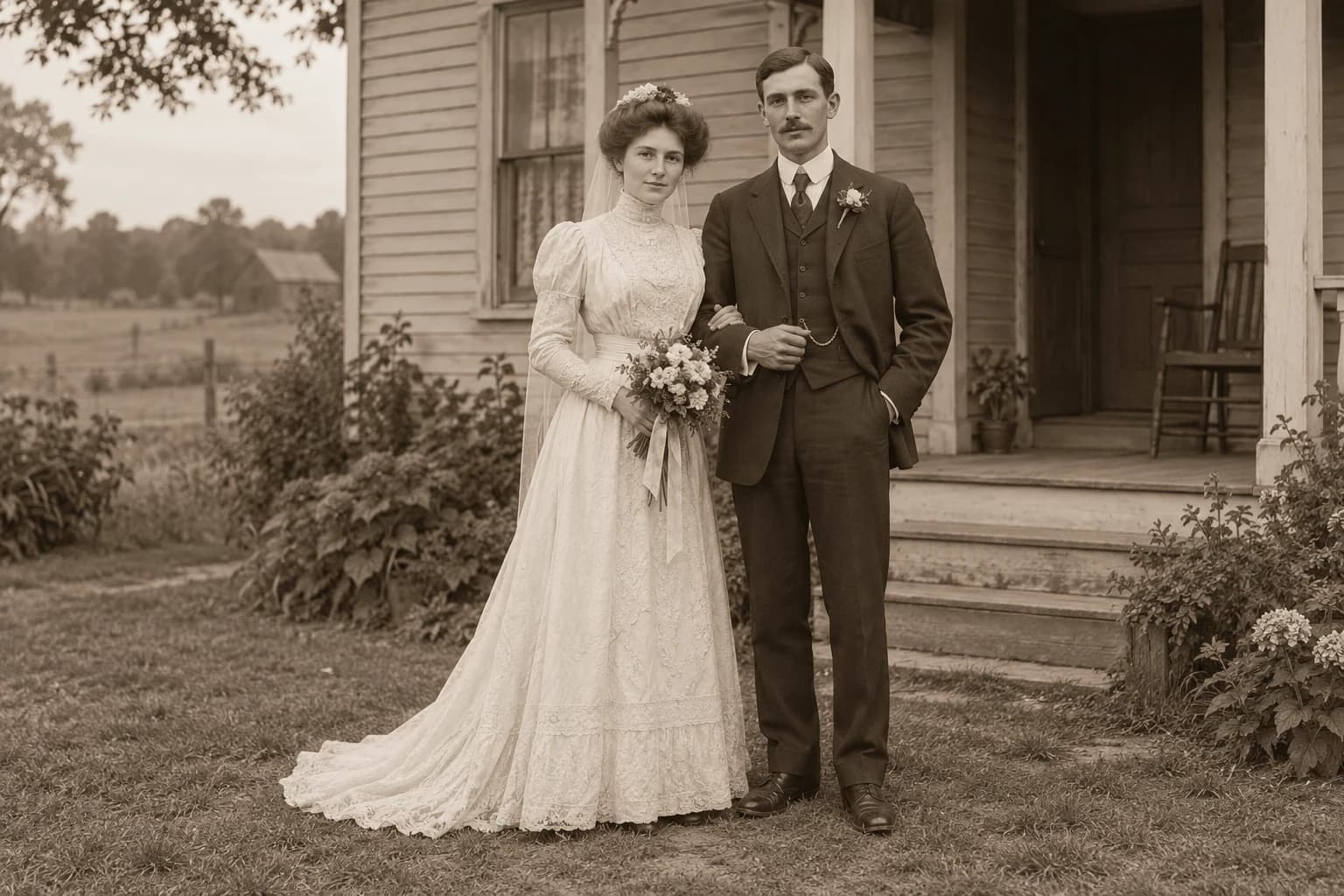
Cover image: AI-generated historical reconstruction of a fictional couple, not an archival photograph.
Open an old family wedding album and the details draw you in: a carefully buttoned dress, a modest bouquet, relatives squeezed into a doorway. Look closer and another story appears. What a family wore, where they gathered and what they chose to preserve can reveal as much as a formal portrait.
The history of weddings in America is best approached as many overlapping histories. Region, faith, cultural heritage and family circumstances all matter. A grand society wedding is one view of a period, not a complete picture of how everyone celebrated.
Start with evidence, not a single picture of the past
The Library of Congress wedding collection brings together portraits, announcements, music and ceremony images. Its American material includes an 1848 marriage-certificate design, an 1894 wedding portrait and a marriage-bureau photograph dated 1915–1920. Together, they offer different windows onto wedding life rather than one universal ceremony.
For your own family, begin with names, dates and places. Ask who made the clothes, who took the picture and whether the gathering happened at home or somewhere hired for the occasion. Write down what relatives actually remember; keep guesses separate. A small annotation now can make an album much more meaningful to the next generation.
The nineteenth century: a growing bridal ideal
One influential fashion story crossed the Atlantic. Queen Victoria's 1840 wedding helped popularize a white bridal look, although she did not invent wearing white. The White House Historical Association describes her cream silk satin and lace ensemble and its wider influence. That influence is a useful milestone, not proof that every American bride immediately followed it.
Read an old wedding photograph with that distinction in mind. A dark dress does not make a celebration less bridal, and an elaborate pale dress does not tell you how most people in the community dressed. Photographs preserve individual choices within particular circumstances.
The early twentieth century: more than one way to celebrate
A studio portrait and a marriage-bureau scene tell different stories about the same broad era. The Library of Congress selection also includes a Polish bride and groom photographed in 1920. These records encourage a wider view: American wedding history includes community traditions and everyday ceremonies alongside highly publicized events.
When borrowing ideas from this period, choose a specific reference. A family portrait might suggest a bouquet shape, a jacket or a simple ceremony arrangement. Describe it to your suppliers as inspiration rather than asking them to reproduce an imagined version of an entire decade.
Mid-century memories and public celebrations
The same archive includes John Kennedy and Jackie Bouvier on their wedding day in 1953, and Tricia Nixon and Edward Cox's 1971 Rose Garden ceremony. Such well-documented occasions help us see particular clothes and settings clearly, but their visibility should not make them stand for every American wedding.
A family album provides a valuable companion. Compare the room, guest groups and everyday objects with the polished public images. Ask which details were special purchases and which were already part of family life. The most useful inspiration may be a modest detail with a personal story.
Bring a little history into an autumn or spring wedding
For autumn 2026, you might frame copies of family photographs beside a guest book, or use an inherited textile as a small display accent. For spring 2027, consider a garden portrait inspired by a family album or a short printed note explaining a meaningful tradition. These are styling ideas, not claims about seasonal trends.
- Ask permission before displaying relatives' photographs or sharing private stories.
- Use copies for displays; keep fragile originals away from food, moisture and direct sunlight.
- Choose one or two meaningful references so the day still feels like yours.
- Explain any unfamiliar ceremony element to guests with help from the people who practise it.
American wedding history FAQs
Is there one traditional American wedding?
No single ceremony represents every family or community. Start with the traditions relevant to you and distinguish personal custom from a universal rule.
Did all brides begin wearing white after 1840?
No. A famous fashion influence does not mean immediate or universal adoption. Our white wedding dress history explores that distinction.
How can we use family history without making a themed wedding?
Choose one personal element, such as a reading, an album display or a meaningful accessory. Let the rest of the celebration suit your own tastes.
Share your references with a wedding planner and photographer. For seasonal styling, read our vintage wedding guide for autumn and spring.