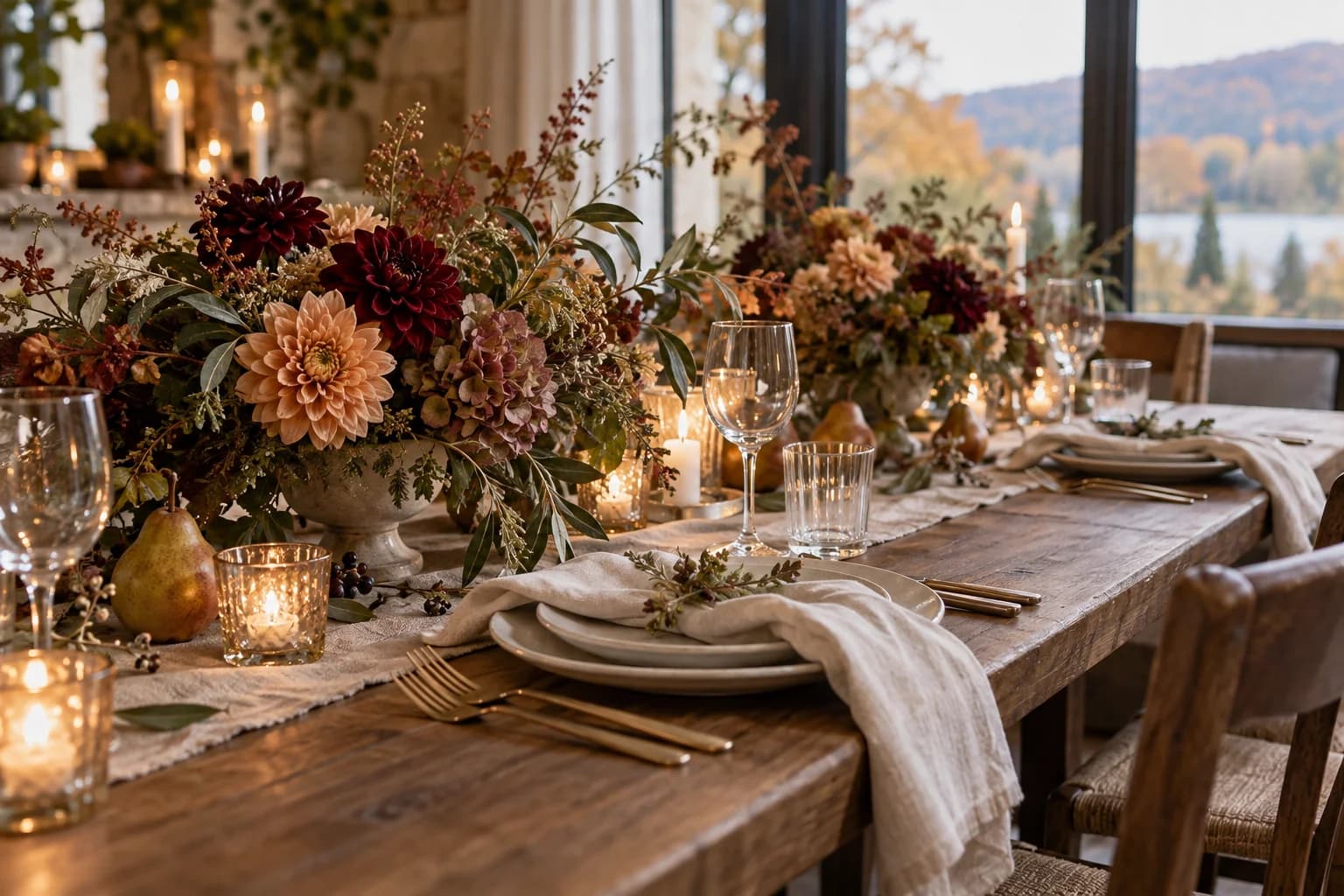
Cover image: AI-generated floral styling inspiration. It does not represent a florist's actual work.
An autumn wedding table does not need to be covered in pumpkins to feel seasonal. A few well-chosen colours, textured flowers and warm light can create the mood while leaving room for the meal and conversation. For couples making decisions this October, a flexible floral brief is more useful than a shopping list of exact stems.
The seasonal flower notes here refer to Northern Hemisphere autumn, especially UK growing conditions. Your florist should confirm availability, quality and substitutions for your own location and wedding date.
Choose a palette before choosing every flower
Start with your venue's existing colours. A room with warm timber may already supply the brown and amber tones you like; a pale modern space may benefit from a stronger floral accent. Choose one leading colour, one supporting colour and a neutral, then let flowers, fabric and stationery repeat them in different proportions.
- Burgundy, apricot and cream: use deeper flowers sparingly against pale linens, with apricot blooms connecting the two.
- Olive, ivory and soft copper: build around loose foliage, cream flowers and a small metallic accent in a candleholder or stationery detail.
- Plum, dusty pink and warm beige: balance rich flower centres with soft fabric and simple glassware for a quieter autumn look.
These are starting ideas, not rules or a forecast of what everyone is choosing. Ask to see a sample against your actual tablecloth and chairs before committing to the whole room.
Ask for seasonal character, with room for substitutions
The Royal Horticultural Society describes dahlias as flowering through summer and autumn until the first frosts. Its chrysanthemum guide also notes late-summer and autumn flowering among outdoor varieties. That makes both useful flowers to discuss with a florist, but a garden flowering season is not a guarantee of local wholesale supply on your date.
Describe the effect you want: a large focal flower, small supporting blooms, movement from foliage, and a loose or structured shape. Let the florist propose alternatives that preserve the colour and silhouette if a preferred stem is unavailable. Request that the substitution process be included in your written proposal.
Design a table people can comfortably use
Set a sample table with the full place setting before deciding how many vases it needs. Include water glasses, wine glasses if used, bread plates, menus and any shared serving dishes. Low arrangements often make conversation easier, but check the sightline from a seated position rather than judging a photograph taken above the table.
Keep candleholders stable and ask the venue which types of candles are permitted; battery alternatives may be the simplest option. Loose ribbon, dried foliage and other decorative materials should stay away from flames. If you use decorative fruit, confirm who supplies and removes it, and keep it separate from food intended for guests unless the caterer agrees otherwise.
Spend on the moments guests will notice
Choose a few focal areas: the ceremony backdrop, the couple's table, or the entrance where people gather. Repeating a simple arrangement across dining tables can feel more considered than ordering a different decorative feature for every surface.
Reusing ceremony flowers may help, but it requires a workable moving plan. Ask who transports them, when the move happens, and whether the arrangements fit their second location. Include setup, delivery, collection, hire items and labour in the quote so you can compare the total, not just the flower line.
Record estimates and agreed amounts in the wedding budget planner. Seasonal flowers are not automatically the least expensive option; a simple design using reliable stock can be easier to price than a very specific large installation.
A short brief to take to your florist
- Your wedding date, venue, guest count and number of tables.
- Three to five reference images, with one sentence explaining what you like in each.
- Your preferred palette and anything you would rather avoid, such as strong fragrance or loose glitter.
- A spending range that includes delivery, setup, collection and hired vessels.
- The arrangements you want photographed most, and your agreed substitution preferences.
Autumn wedding flower FAQs
Do autumn wedding flowers have to be orange?
No. Cream, plum, olive, pale pink and burgundy can all suit an autumn setting. Texture and lighting can carry the seasonal feeling without an orange palette.
Are dried flowers always cheaper?
No. Preparation, arrangement size and design labour still affect the price. Compare complete proposals and ask how dried elements will be secured and transported.
Can we move our ceremony flowers to the reception?
Often, if the design and timings allow it. Confirm the staff, access and additional labour cost instead of assuming guests or family will handle the move.
Browse wedding florists and bring the vendor question worksheet to your consultation. If your ceremony is outdoors, pair the styling plan with our October weather and daylight guide.