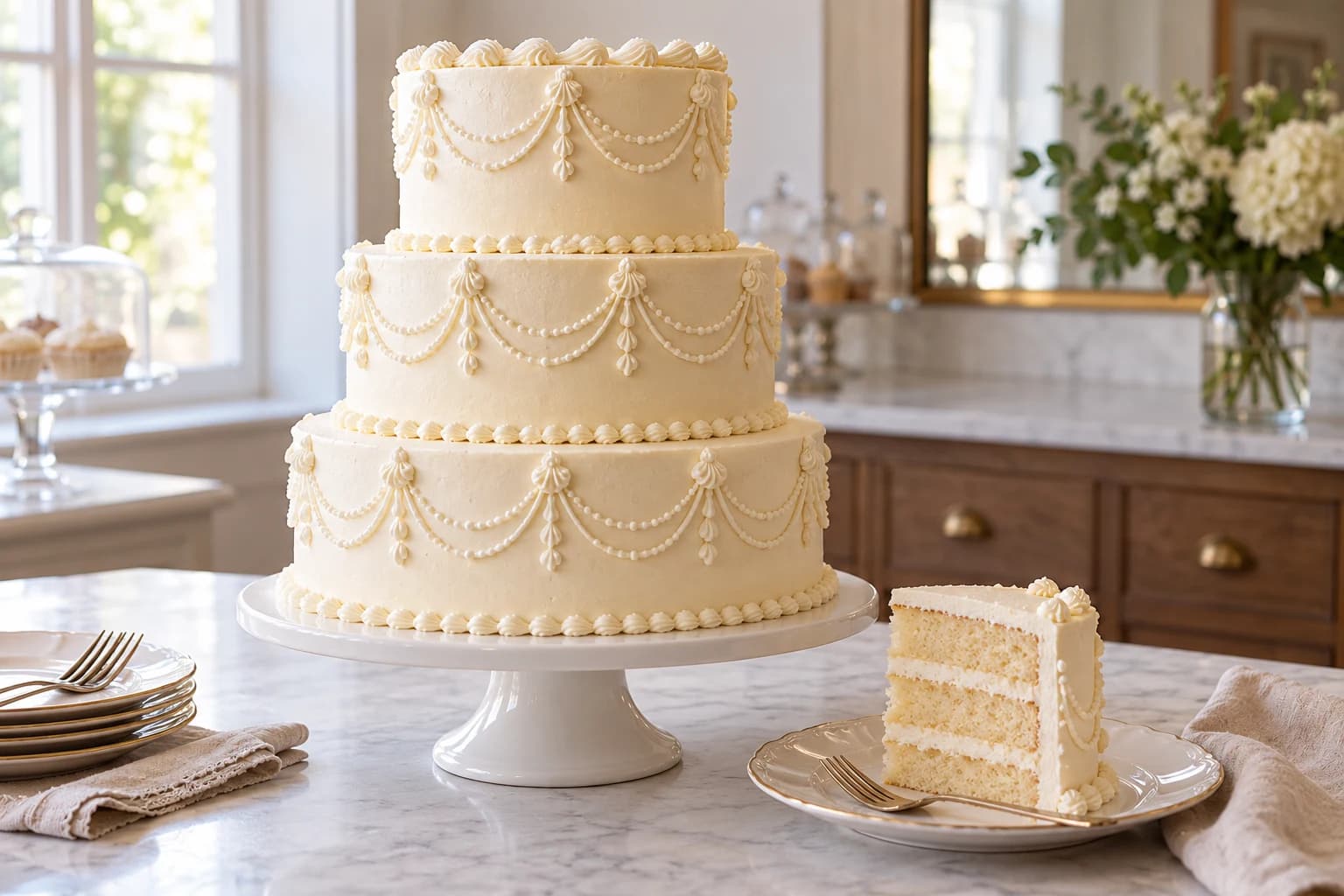
Cover image: AI-generated cake inspiration in a realistic photographic style; not a historical cake or a baker's actual work.
A wedding cake is a dessert, a gathering point and sometimes a family keepsake. In an old album it may command its own photograph; in a museum, a small surviving decoration can tell a surprisingly personal story. American wedding cake history becomes especially interesting when we follow those objects rather than imagine that every family served the same towering white confection.
The examples here are documented snapshots, not a claim that one recipe or ritual represented every American community. They also offer useful inspiration for couples choosing a cake for winter 2026–27 or spring 2027.
The nineteenth century: cake as a wedding souvenir
One remarkable survivor comes from the 1863 New York wedding of performers Charles Stratton and Lavinia Warren. The Library of Congress preserves a piece of their wedding cake, acquired with the Fiske papers in the 1950s. Warren had sent it to the Fiskes with a letter in 1905. The slice records a connection between people as well as a famous celebration.
Cake souvenirs also appear in presidential history. The White House Historical Association describes preserved wedding cake slices, including one from Grover Cleveland's 1886 wedding in the Smithsonian's collection. Such examples show cake surviving as memorabilia, rather than simply disappearing at the end of dinner.
For a wedding today, a photograph of the cake, a copy of the menu or a saved decoration can preserve the memory without depending on keeping the dessert itself. Ask your baker for storage advice if saving an edible portion matters to you.
Regional traditions complicate the picture
A grand public wedding gives only one view. A 1970 Smithsonian folklife program account describes stack cake as a wedding favorite in earlier days when sugar was less plentiful. It is a reminder to ask about regional and family food traditions alongside the familiar tiered centerpiece.
Start with a question for relatives: what dessert do they remember from weddings? Record the recipe's name and who made it. If you want to serve a family favorite, ask the caterer or baker whether they can adapt it for the guest count and service arrangements. A meaningful dessert does not have to become a tall display cake.
The cake topper becomes a portrait of the couple
The Smithsonian's 1956 wedding cake figure documents another change. Its collection account dates the first production of wedding cake toppers to the 1880s and explains that mass-produced figures began representing different races in the 1950s. Before that, some families and bakers painted standard figures to make them resemble particular couples.
That small object raises a useful design question: does the decoration feel like you? You might choose initials, a family keepsake, a simple edible ornament or no topper at all. If an older object will sit on the cake, ask the baker how to support it and separate it safely from the food.
A centerpiece is not a universal blueprint
The Library of Congress account of the 1953 Bouvier–Kennedy wedding records a four-foot-tall cake. It is an example of a spectacular individual celebration, not a practical serving guide for everyone else.
For your own event, decide first whether cake is the main dessert, a small ceremonial element or part of a larger dessert selection. Give the baker the expected guest count and explain the service plan before discussing the number of tiers.
Bring the history into a winter or spring design
For winter 2026–27, consider ivory piping and a restrained ribbon detail that echoes a family photograph. For spring 2027, a small cake with a delicate pattern or a separate family-recipe dessert could provide the connection. These are creative options rather than seasonal trend forecasts.
- Choose flavors at a tasting, then discuss fillings and display conditions with the baker.
- Confirm delivery, setup, stand hire, cutting and service in the written quote.
- Share dietary requirements early and ask how they will be handled.
- Have the venue approve the cake table position and the timing of delivery.
Wedding cake history FAQs
Has every American wedding always had a tiered white cake?
No single cake represents every period, region or family. Surviving objects and local accounts show a more varied history.
Do we need a traditional cake topper?
No. Choose a decoration that feels meaningful, or let the cake design stand on its own.
How can we include a family recipe?
Share it with your baker or caterer early, then agree on quantities, preparation and service rather than assuming it can be scaled unchanged.
Find your starting point in our history of weddings in America, then coordinate cake delivery with your wedding planner and record the costs in your budget planner.